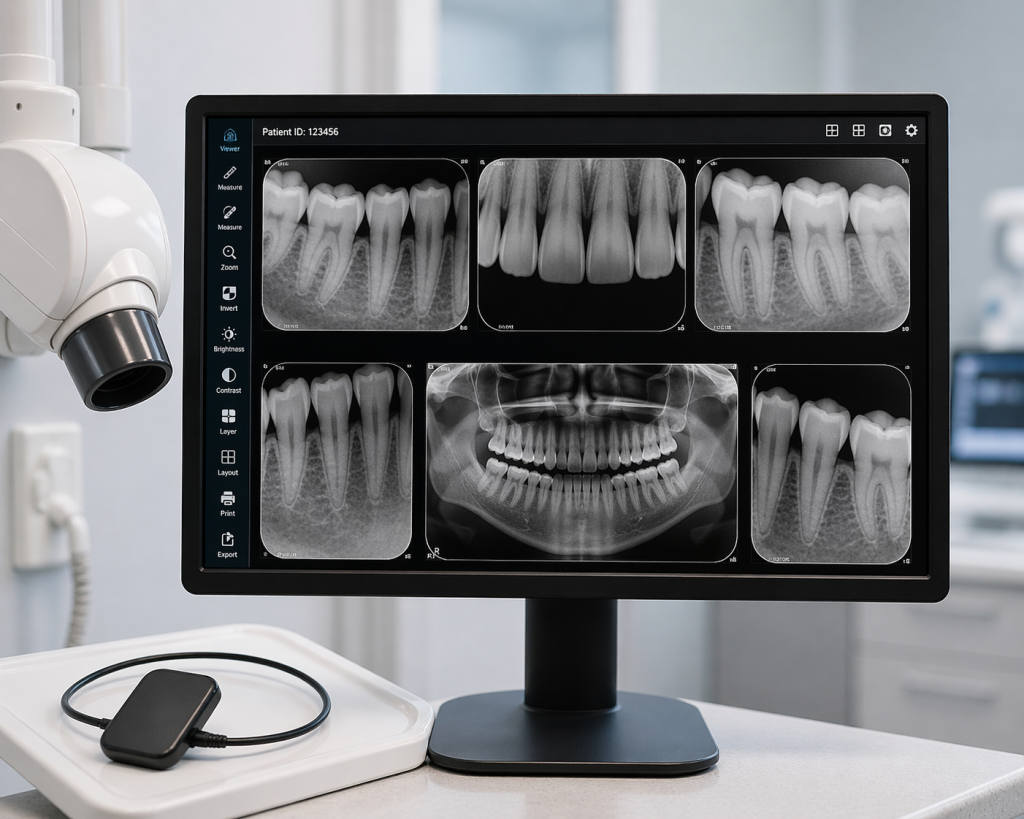
Digital Radiographs in Thousand Oaks, CA — Clearer Imaging, Safer Diagnosis
At Nima Aleagha DDS, we use advanced digital radiograph technology to capture detailed images of your teeth, roots, and jawbone with greater clarity and significantly less radiation than traditional film X-rays. Digital radiographs are a foundational diagnostic tool that allows us to detect problems early, monitor changes over time, and provide more accurate, personalized treatment planning. Call (805) 494-1831 to schedule your next dental visit.
Request an AppointmentWhat Are Digital Radiographs?
Digital radiographs — also called digital dental X-rays — use electronic sensors instead of traditional photographic film to capture images of the structures inside and around your teeth. The sensor transmits the image directly to a computer screen in seconds, where it can be viewed, enlarged, adjusted for brightness and contrast, and stored in your digital patient record.
This technology represents a significant improvement over film-based X-rays in terms of speed, image quality, radiation safety, and environmental impact. At Nima Aleagha DDS, digital radiographs are a standard part of our diagnostic process for new patients and ongoing care.
What Digital Radiographs Can Reveal
Many of the most common and serious dental problems develop in areas that cannot be seen with the naked eye. Digital radiographs give our team a complete view of what is happening beneath the surface:
- Cavities forming between teeth or beneath existing restorations
- Bone loss caused by periodontal disease
- Infections, cysts, or abscesses at the tooth root
- Impacted or unerupted teeth, including wisdom teeth
- Changes in bone density that may indicate underlying health conditions
- Root fractures or trauma-related damage
- The fit and integrity of existing crowns, fillings, and other restorations
- Developmental issues in children’s emerging permanent teeth
The Advantages of Digital Over Traditional Film X-Rays
Digital radiographs offer patients at Nima Aleagha DDS several meaningful benefits over older film technology:
Up to 90% less radiation: Digital sensors require far less X-ray exposure than traditional film to produce a diagnostic-quality image — making them a much safer choice for patients of all ages, including children and pregnant women (with appropriate precautions).
Instant image availability: Images appear on screen within seconds, so our dentist can discuss findings with you in real time during your appointment rather than waiting for film to develop.
Superior image detail: Digital images can be magnified and enhanced to reveal subtle features that film may miss — catching problems earlier and with greater confidence.
Easy storage and transfer: Your images are saved automatically to your digital record and can be sent electronically to specialists or insurance companies without delay.
No chemical processing: Digital radiography eliminates the need for darkroom chemicals, making the process faster, cleaner, and more environmentally responsible.
Digital Radiographs as Part of Comprehensive Dental Care
We use digital radiographs alongside our intraoral camera to give patients the most complete diagnostic picture possible — both surface-level and beneath the gumline. Together these tools help us catch issues at their earliest, most treatable stage and provide the visual information patients need to understand and feel confident in their treatment recommendations.
Frequently Asked Questions About Digital Radiographs
How are digital radiographs different from regular dental X-rays?
Digital radiographs use electronic sensors and computer imaging instead of photographic film. They produce higher-quality images faster, emit significantly less radiation, and allow images to be stored and shared electronically. The diagnostic process is the same — only the technology is different, and it is meaningfully better.
How much radiation do digital radiographs emit?
Digital radiographs emit up to 90% less radiation than traditional film X-rays. The exposure is extremely low — far less than what you would receive on a cross-country flight. We also use lead aprons and thyroid collars to minimize any incidental exposure during imaging.
How often do I need dental radiographs?
The recommended frequency depends on your age, oral health history, and risk factors. Most healthy adults receive bitewing radiographs every one to two years as part of their routine exam. New patients typically receive a full mouth series. Children and patients with a history of decay or gum disease may be imaged more frequently.
Are digital radiographs safe for children?
Yes. The low radiation exposure of digital radiographs makes them safe for pediatric patients. We adjust the field of exposure to the minimum necessary for diagnostic accuracy and use protective equipment during imaging. Regular radiographs are important in children for monitoring tooth development and detecting cavities in baby and emerging permanent teeth.
What is the difference between digital radiographs and digital X-rays listed on other pages?
They refer to the same technology. “Digital X-rays” and “digital radiographs” are interchangeable terms for the same electronic imaging system. Whether listed separately or together, both refer to our computer-based dental imaging at Nima Aleagha DDS.
Can I see my dental radiographs?
Absolutely. One of the advantages of digital imaging is that your images can be displayed instantly on a chairside monitor during your appointment. Our dentist will walk you through what each image shows, point out any areas of concern, and answer your questions — so you always understand what is happening with your oral health.
Will my insurance cover digital dental radiographs?
Most dental insurance plans cover radiographs as part of routine preventive care, typically once or twice per year depending on your plan. Additional imaging required for diagnostic purposes may be covered at a different rate. Our team will verify your benefits before taking any images and let you know of any expected out-of-pocket cost.