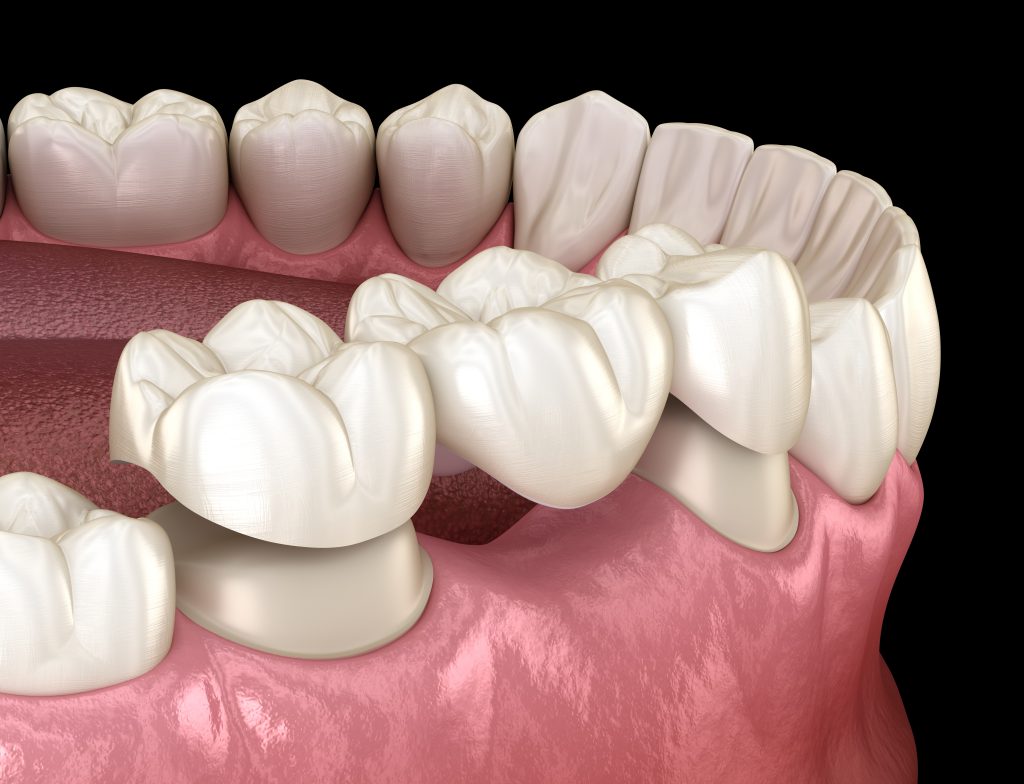
Fixed Dental Bridges in Thousand Oaks, CA — Close the Gap, Restore Your Smile
A fixed dental bridge is a proven, time-tested solution for replacing one or more missing teeth with a permanent, non-removable restoration. At Nima Aleagha DDS, we custom-design bridges that close gaps seamlessly, restore full chewing function, and blend naturally with your existing smile. Unlike removable options, a fixed bridge is cemented in place and requires no removal for cleaning. Call (805) 494-1831 to find out if a bridge is right for you.
Request an AppointmentWhat Is a Fixed Dental Bridge?
A fixed dental bridge literally bridges the gap left by one or more missing teeth. It consists of one or more artificial teeth (called pontics) held in place by dental crowns that are cemented onto the healthy natural teeth on either side of the gap (called abutment teeth). The result is a stable, permanent replacement that looks and functions like your natural teeth.
At Nima Aleagha DDS, bridges are fabricated from high-quality porcelain or porcelain-fused-to-metal materials, carefully shade-matched to blend with your surrounding teeth for a natural, consistent appearance.
Why Replacing Missing Teeth Matters
Leaving a gap after tooth loss is never a neutral decision for your oral health. Without a replacement, neighboring teeth drift into the empty space over time, altering your bite and creating new alignment problems. The opposing tooth may begin to over-erupt (grow out of its socket without resistance), and bone loss in the area of the missing tooth root begins to occur. A fixed bridge prevents all of these changes while simultaneously restoring aesthetics and function.
The Fixed Bridge Procedure
Getting a fixed bridge at Nima Aleagha DDS typically requires two appointments:
Appointment 1 — Preparation: The abutment teeth on either side of the gap are shaped to make room for the crowns that will anchor the bridge. Detailed impressions are taken and sent to a dental laboratory, and a temporary bridge is placed to protect the prepared teeth.
Appointment 2 — Placement: Your custom bridge is checked for fit, color, and bite before being permanently cemented in place. Minor adjustments ensure comfortable and even bite function.
Fixed Bridge vs. Dental Implant
Both bridges and dental implants are popular options for replacing missing teeth, but they serve different needs. A bridge is faster to complete and does not require surgery, making it a good option for patients who are not implant candidates or prefer a non-surgical approach. However, a bridge requires preparation (reducing) of the adjacent healthy teeth, and it does not replace the tooth root — meaning bone resorption beneath the pontic will continue over time.
A dental implant preserves bone, does not affect adjacent teeth, and is generally considered the more durable long-term solution. Our dentist will discuss both options and help you weigh the benefits and tradeoffs based on your specific situation.
Caring for Your Fixed Bridge
A fixed bridge requires consistent oral hygiene to last. Brush twice daily and use a floss threader or water flosser to clean beneath the pontic where food and bacteria can accumulate. Regular professional cleanings at Nima Aleagha DDS are essential for monitoring the health of the bridge and the underlying gum tissue. With proper care, a well-made bridge can last 10 to 15 years or more.
Frequently Asked Questions About Fixed Bridges
What is a fixed bridge and how does it work?
A fixed bridge replaces one or more missing teeth using artificial teeth (pontics) anchored to crowns placed on the natural teeth on either side of the gap. The bridge is permanently cemented and cannot be removed by the patient.
Is getting a dental bridge painful?
The procedure is performed under local anesthesia so you should not feel pain during treatment. Some sensitivity in the prepared teeth is normal for a few days afterward and typically resolves once the permanent bridge is placed.
How long does a fixed dental bridge last?
With proper oral hygiene and regular dental visits, a fixed bridge typically lasts 10 to 15 years. Some last considerably longer. The longevity depends on the material, your bite, and how well you care for the bridge and the supporting teeth.
Can a bridge replace multiple missing teeth?
Yes. A bridge can span a gap of two or even three adjacent missing teeth, depending on the location and the strength of the remaining teeth on either side. Our dentist will evaluate whether a bridge is structurally appropriate for your specific situation.
Do I need to do anything special to clean my bridge?
Yes. You cannot floss between bridge teeth the usual way because the teeth are connected. Use a floss threader, interdental brush, or water flosser to clean beneath the pontic daily. Standard brushing along the gumline is also important to protect the health of the abutment teeth and surrounding tissue.
Is a bridge or a dental implant a better choice for me?
It depends on your bone health, budget, and goals. A bridge is faster and non-surgical, but requires reducing healthy adjacent teeth and does not preserve the jawbone where the tooth is missing. An implant preserves bone and does not affect adjacent teeth but requires surgery and a longer timeline. Our dentist will review both options with you in detail.
Will my bridge look natural?
Yes. Porcelain bridges are custom shade-matched to blend with your surrounding teeth. Once placed, most people — including yourself — will not be able to distinguish the bridge from your natural teeth.