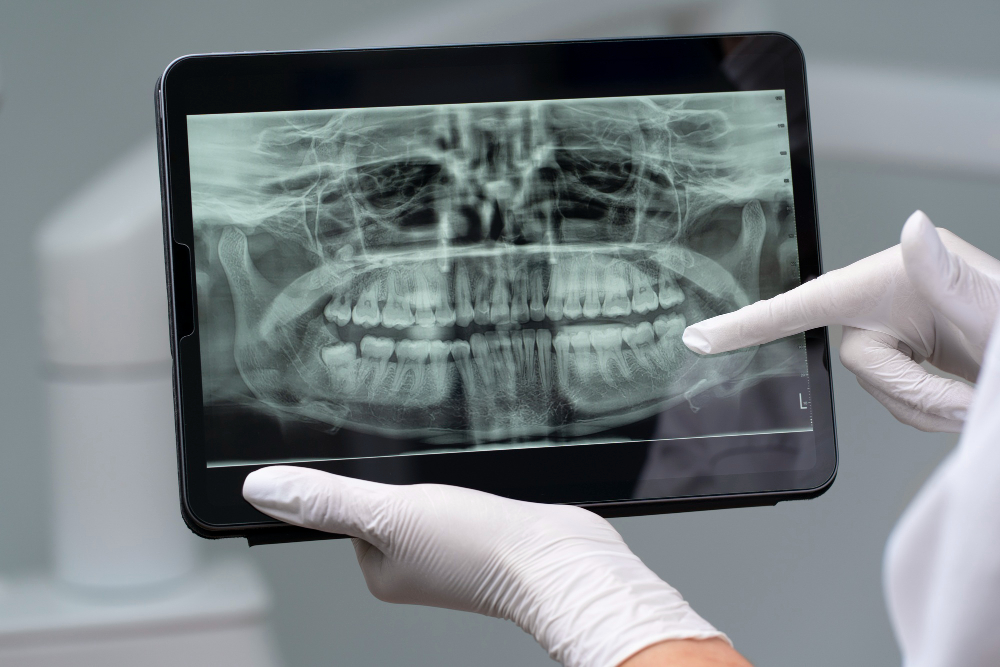
Digital X-Rays in Thousand Oaks, CA — See What the Naked Eye Can’t
At Nima Aleagha DDS, we use state-of-the-art digital X-ray technology to get a detailed, accurate picture of your oral health. Digital X-rays allow us to detect cavities, assess bone density, monitor developing teeth, and identify issues that are not visible during a standard visual exam — all with significantly less radiation than traditional film X-rays. Early detection means simpler, less expensive treatment. Call (805) 494-1831 to schedule your dental visit today.
Request an AppointmentWhy Digital X-Rays Are an Essential Diagnostic Tool
No matter how thorough a visual dental examination is, there are problems that simply cannot be detected without radiographic imaging. Digital X-rays give our team a clear view of what is happening inside and around your teeth, beneath the gumline, and within the bone — areas that are completely invisible to the naked eye.
With digital X-rays at Nima Aleagha DDS, we can accurately detect and monitor:
- Cavities forming between teeth or beneath existing restorations
- Bone loss associated with periodontal (gum) disease
- Abscesses, cysts, and infections at the root level
- Impacted teeth, including wisdom teeth
- The development and positioning of permanent teeth in children
- Changes in bone density over time
- The condition of existing fillings, crowns, and other restorations
Digital X-Rays vs. Traditional Film X-Rays
Digital radiography represents a major improvement over old-fashioned film X-rays in every way that matters to patients:
Lower Radiation Exposure: Digital X-rays emit up to 90% less radiation than traditional film, making them a much safer option — especially for children and patients who require frequent imaging.
Immediate Results: Images appear on screen within seconds of being taken, so our dentist can discuss findings with you in real time during your appointment.
Enhanced Image Quality: Digital images can be enlarged, brightened, and adjusted to improve clarity, helping us spot issues that might otherwise be missed.
No Chemical Processing: Digital X-rays require no darkroom or chemical development, making them faster, more environmentally friendly, and more hygienic.
Easy Record Keeping and Sharing: Digital images are stored electronically and can be quickly shared with specialists or other providers if you need a referral for treatment like root canal therapy, dental implants, or tooth extractions.
How Often Are X-Rays Taken?
The frequency of dental X-rays depends on your age, oral health history, and risk factors. New patients typically receive a full mouth series to establish a baseline. After that, most healthy adults receive bitewing X-rays every one to two years during routine checkups. Children and patients with a history of decay or gum disease may be X-rayed more frequently.
Our dentist will always discuss the recommended X-ray schedule with you and answer any questions about frequency or exposure. We take a conservative approach — only recommending imaging when it provides clinical benefit.
Part of Our Commitment to Modern Dental Technology
Digital X-rays are just one example of the advanced technology we use at Nima Aleagha DDS to deliver better, more accurate care. We also use an intraoral camera to give patients a close-up view of their own teeth, and we pair imaging results with thorough clinical exams to give you a complete picture of your oral health. Whether we find something that needs attention or everything looks great, you will leave your appointment fully informed.
Frequently Asked Questions About Digital Dental X-Rays
Are digital dental X-rays safe?
Yes. Digital X-rays use up to 90% less radiation than traditional film X-rays. The exposure is extremely low — comparable to the natural background radiation you receive during a short flight — and the benefit of early detection far outweighs the minimal risk. We also use protective lead aprons for all patients.
How often do I need dental X-rays?
It depends on your individual oral health status. Most healthy adults receive bitewing X-rays every one to two years. New patients and those with a history of decay, gum disease, or complex dental histories may be imaged more frequently. Our dentist will recommend a schedule based on your specific needs.
What can dental X-rays detect that a visual exam cannot?
X-rays reveal cavities forming between teeth or under existing restorations, bone loss from gum disease, root infections, cysts, impacted teeth, and changes in bone structure. These are issues that are impossible to identify through visual inspection alone.
Do children need dental X-rays?
Yes. X-rays are particularly important for monitoring the development and eruption of permanent teeth in children, detecting cavities in baby teeth, and identifying potential orthodontic concerns early. We use the lowest effective radiation settings for all pediatric patients.
Can I request a copy of my dental X-rays?
Absolutely. Your digital X-rays are stored electronically in your patient record and can be provided to you or forwarded to a specialist at any time. Simply ask our team and we will arrange the transfer.
Will my insurance cover dental X-rays?
Most dental insurance plans cover X-rays as part of preventive care, typically once or twice per year. Coverage varies by plan, so our team will verify your benefits before taking any images and inform you of any out-of-pocket costs.
What is the difference between bitewing X-rays and a full mouth series?
Bitewing X-rays capture the upper and lower back teeth in one image and are primarily used to detect cavities between teeth and monitor bone levels. A full mouth series (also called a panoramic or periapical series) captures all of the teeth and surrounding bone and is typically taken for new patients or when a comprehensive view is needed.